
JESPER THOUR
Utan faktisk fara / Harmless in reality
Read the review in Omkonst
26/3 - 25/4 2025
Jesper Thour (b. 1993, Växjö, Sweden) lives and works in Jäckvik, Sweden. He holds a Master’s degree in Fine Arts from Konstfack University of Arts, Crafts and Design
(2021). He has since exhibited at Vandalorum Museum of Art and Design, Katrineholm Konsthall, and Ronneby Konsthall in addition to receiving the Erland Cullberg
Scholarship and the Swedish Arts Grants Committee’s one-year working grant. Thour had his debut exhibition at Galleri Hedenius in May 2023. Through painting and
installation, Thour follows play – privileging the enjoyment and immediacy of making itself.
“Finally the priest stood in the pulpit.”
So begins Gösta Berling’s Saga by Selma Lagerlöf, not at the beginning of the story, but in the middle of things. Similarly, Jesper Thour’s exhibitions often begin in media res. The audience enters mid-current, drifting through a confluence of figures that surface and recede like fragments in a fairytale, one that doesn’t want to be told or understood in any other way than through art. If Lagerlöf’s pulpit marks a stage of moral authority and public scrutiny, a moment when the demands of a role threaten to eclipse the self, Thour’s practice lingers in a related terrain. His work orbits group belonging and the subtle violences of fitting in: the ways we reshape, mute, or divide ourselves in order to remain inside the circle.
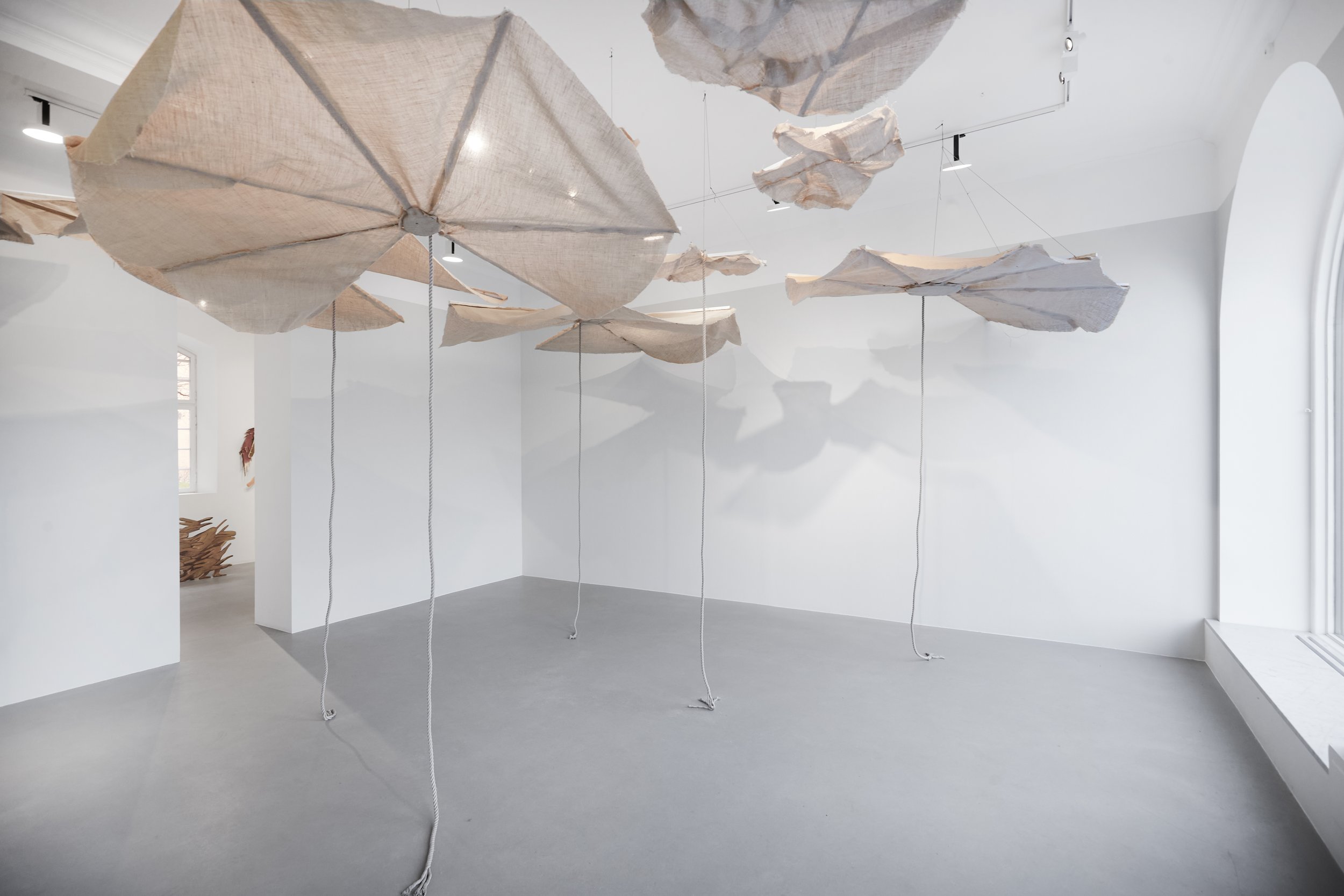
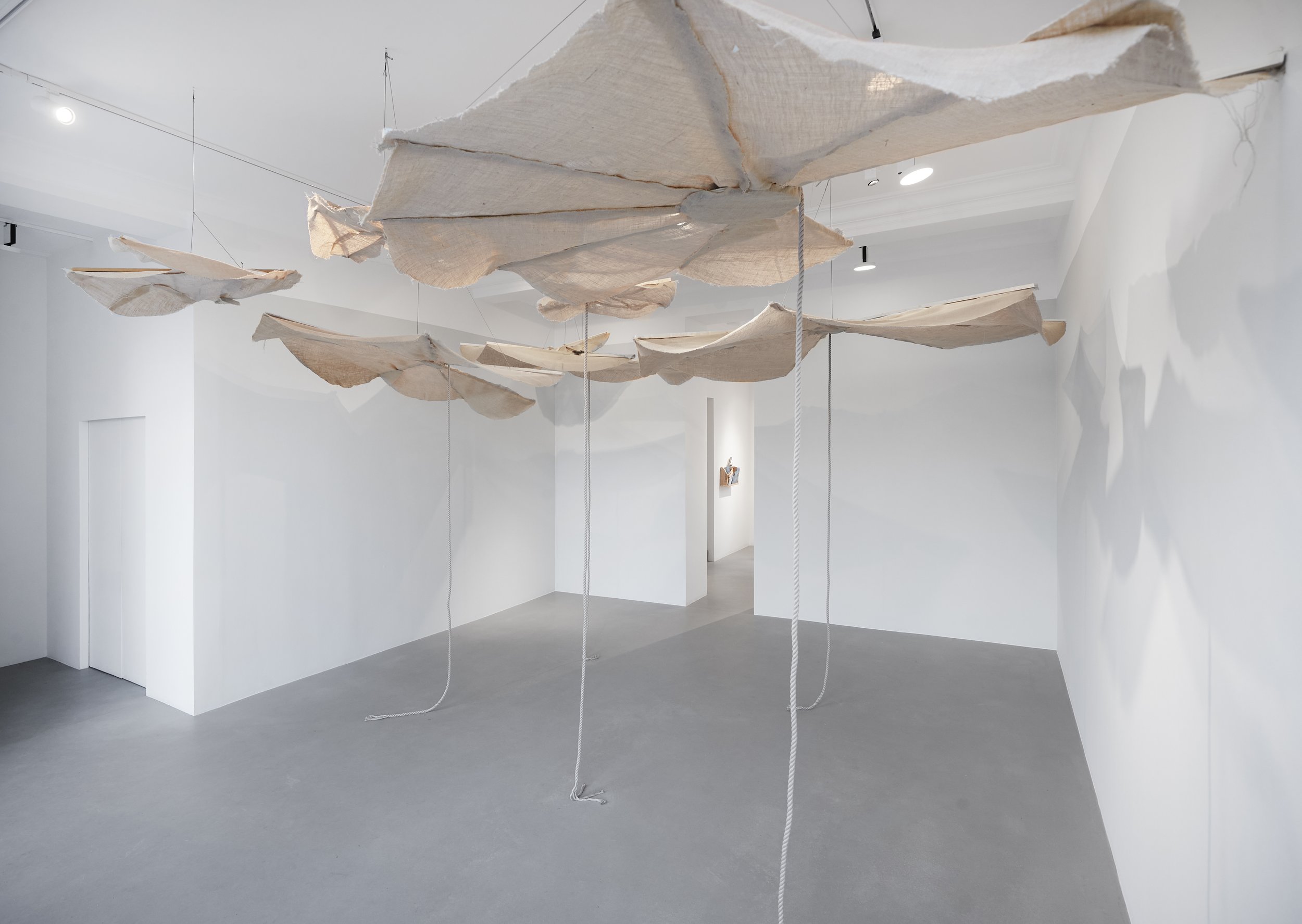
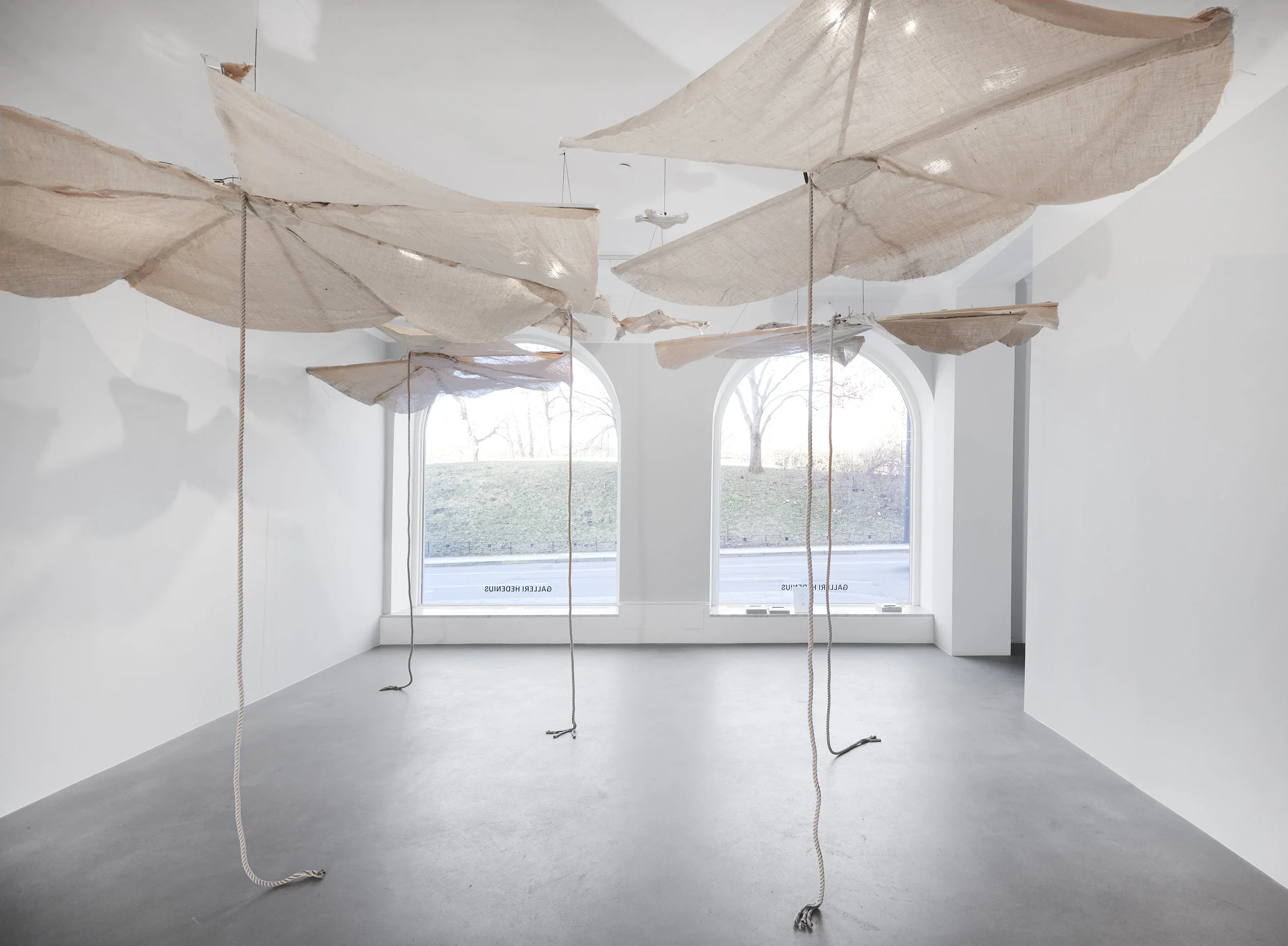
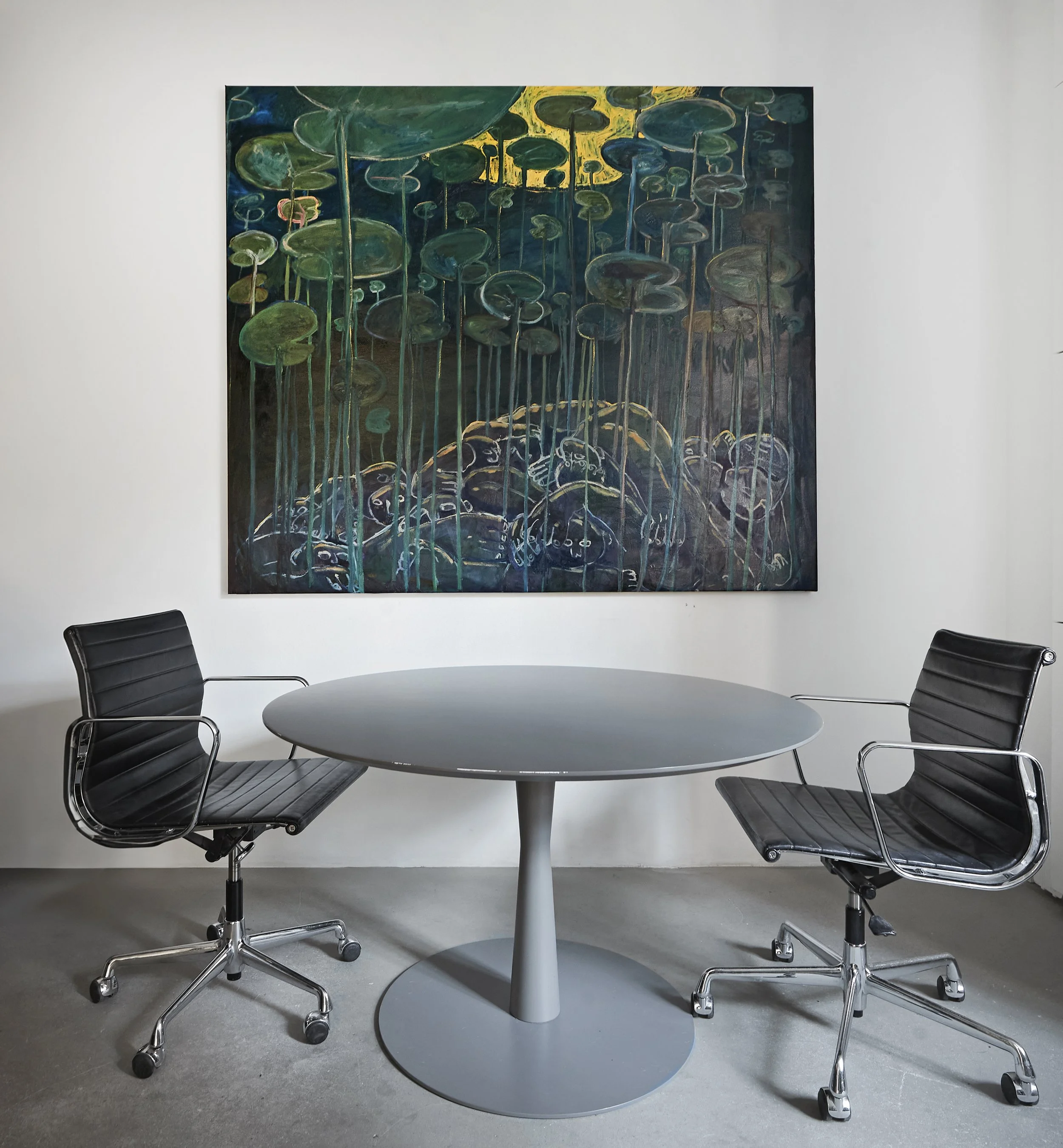
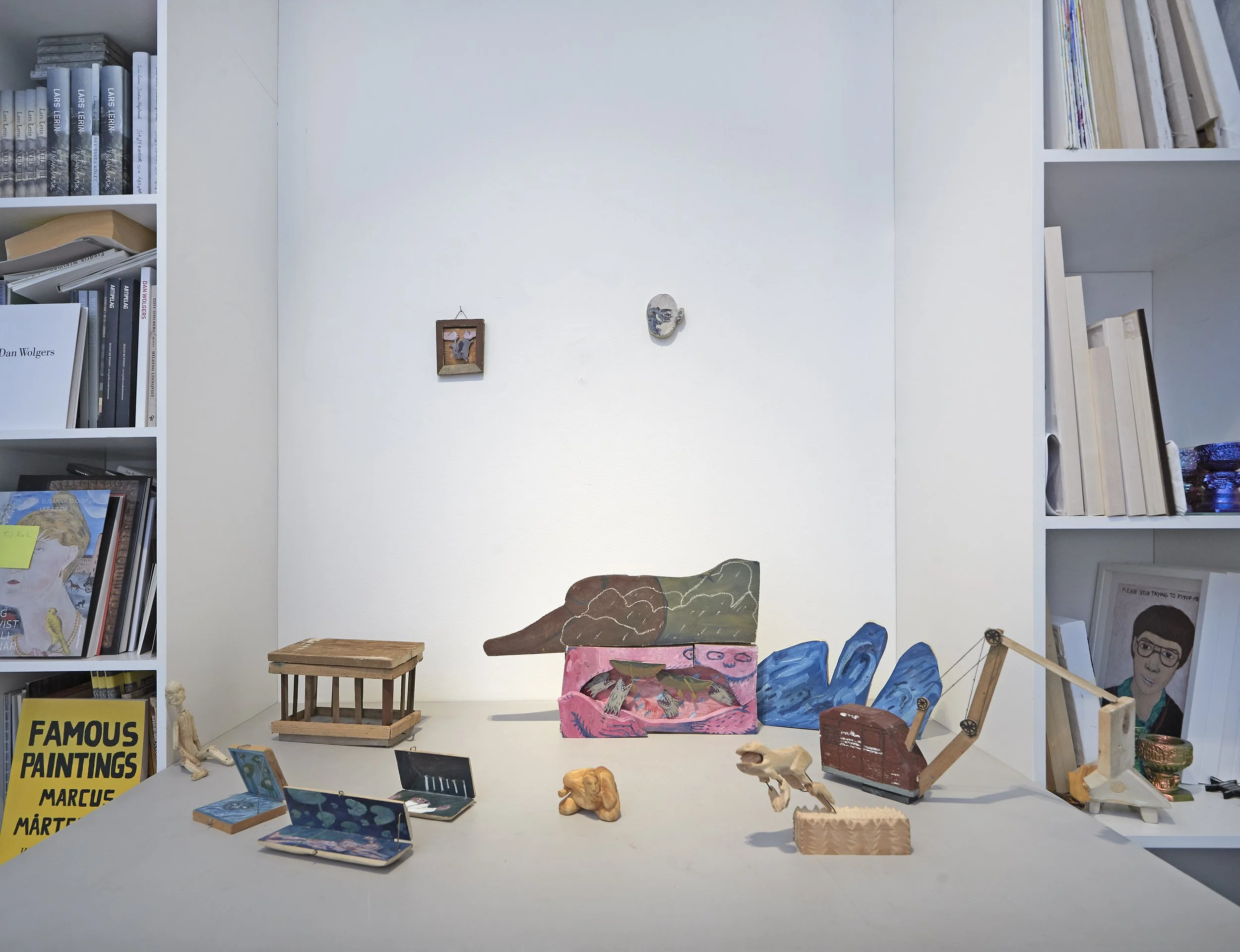
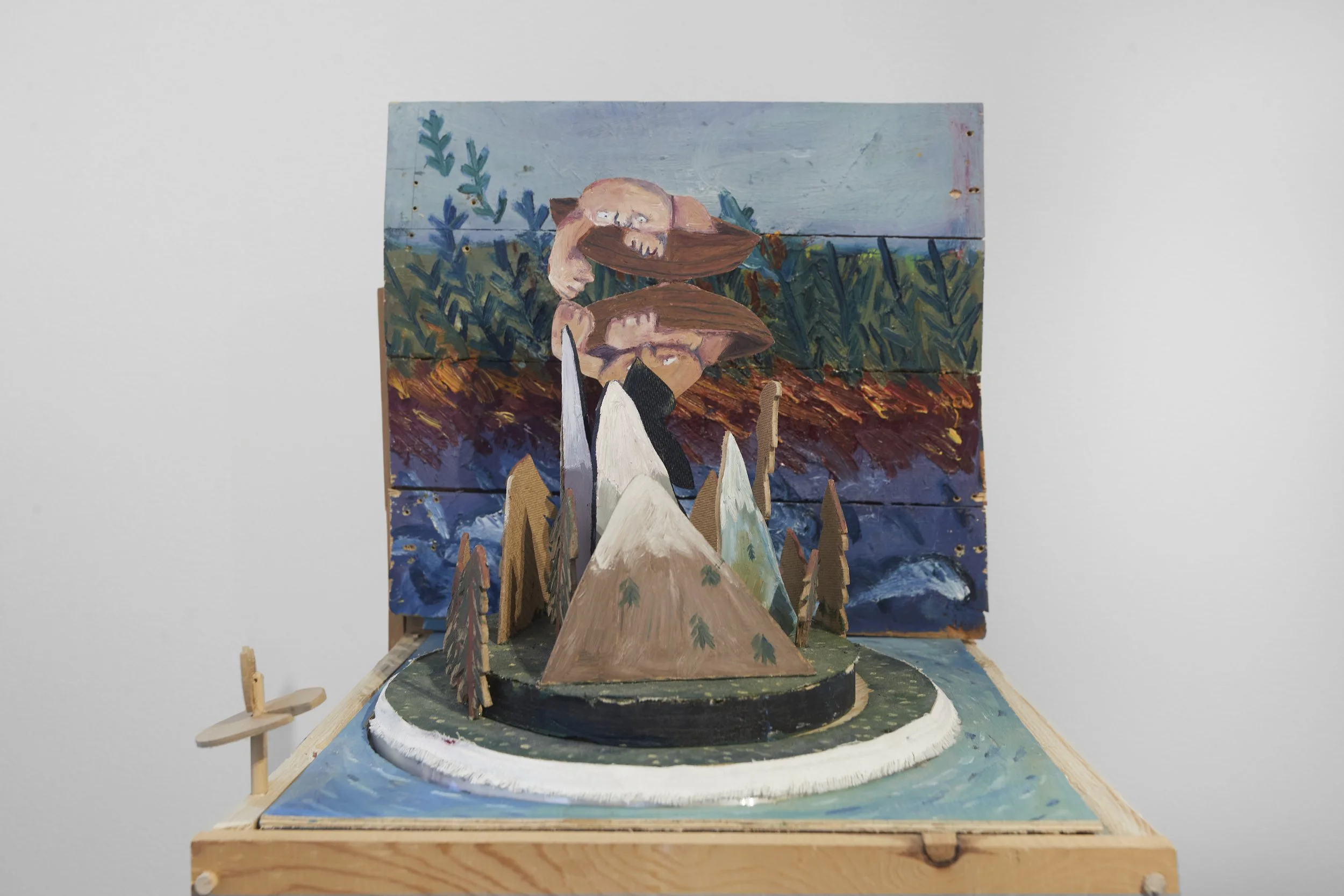
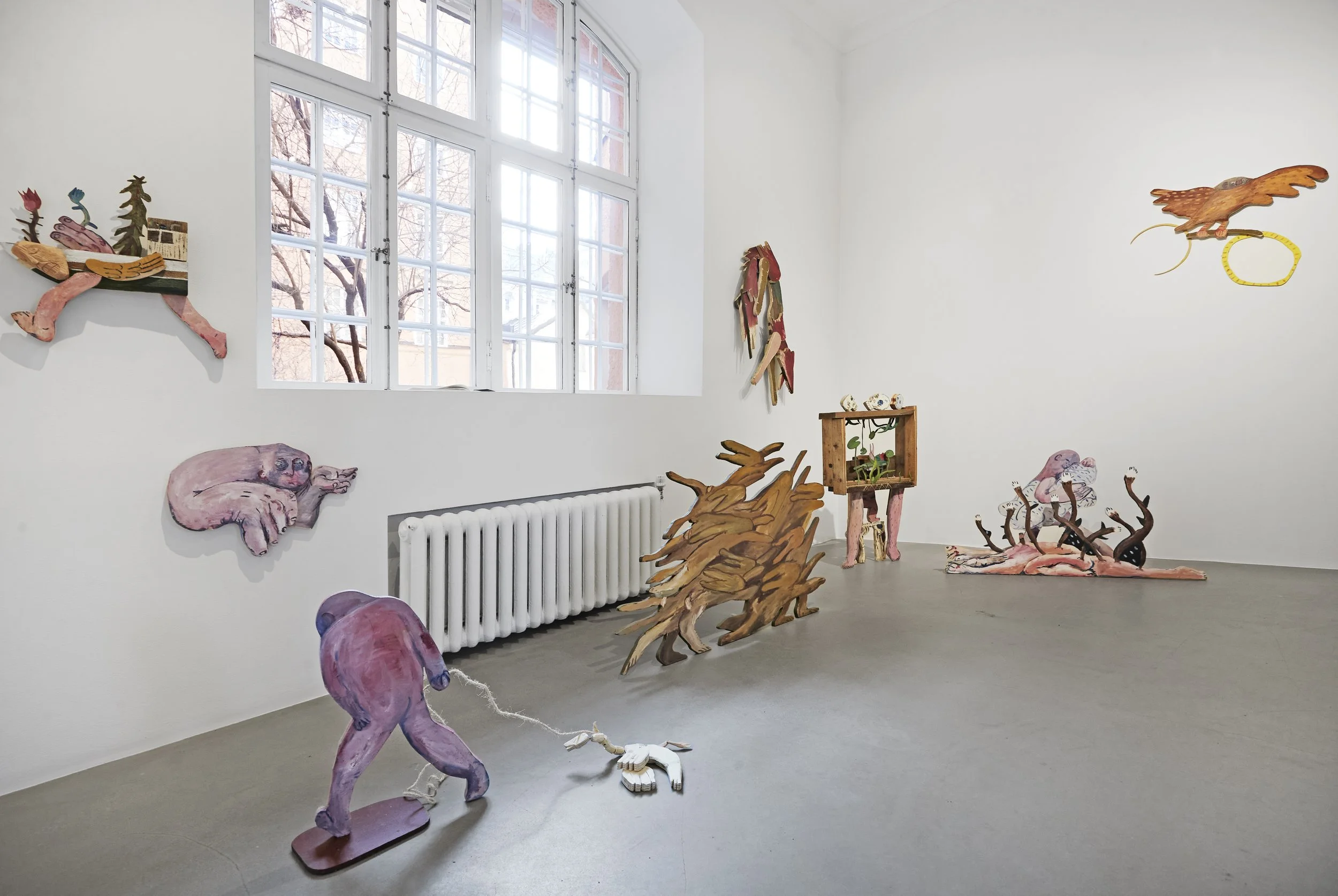
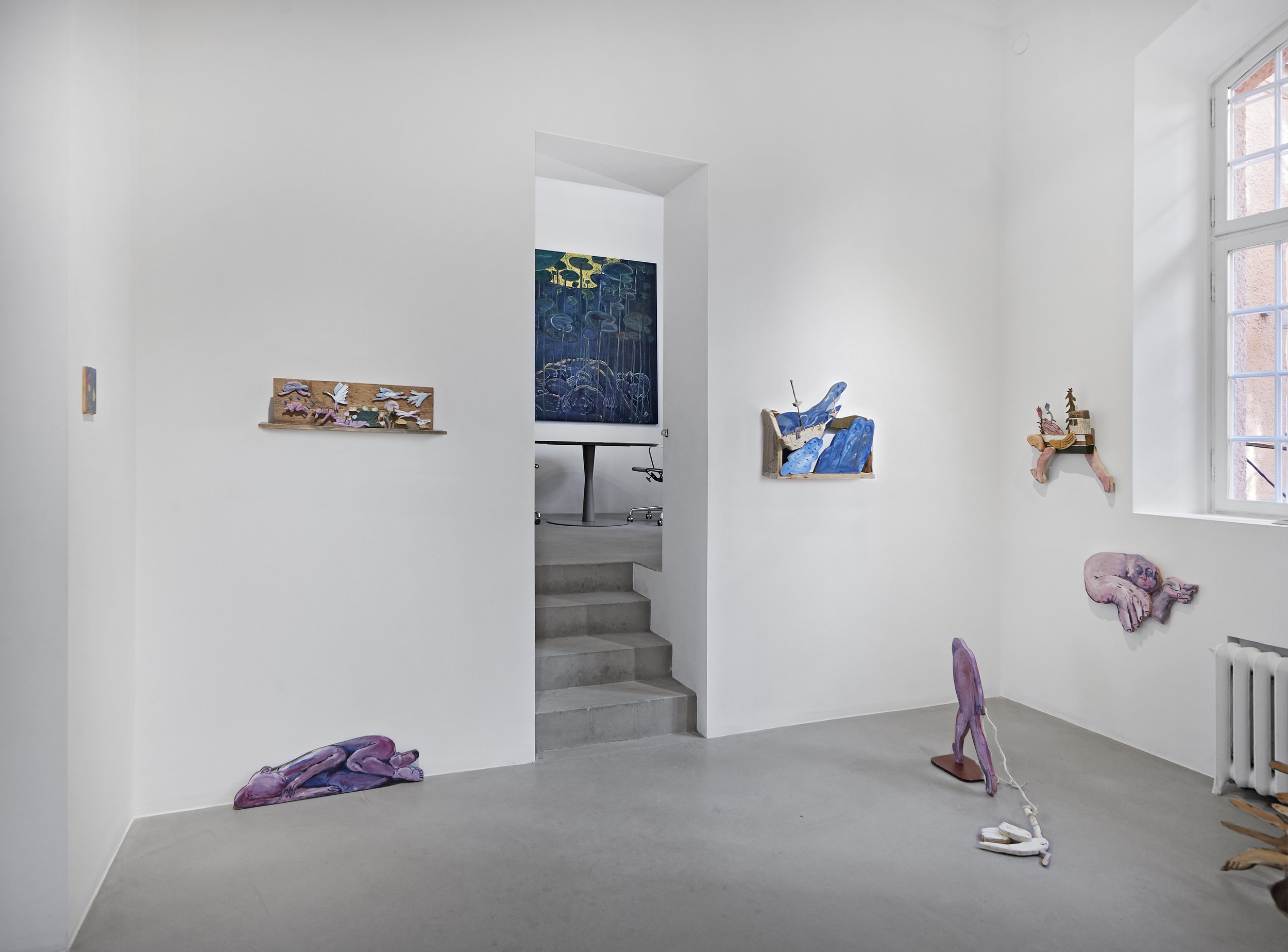
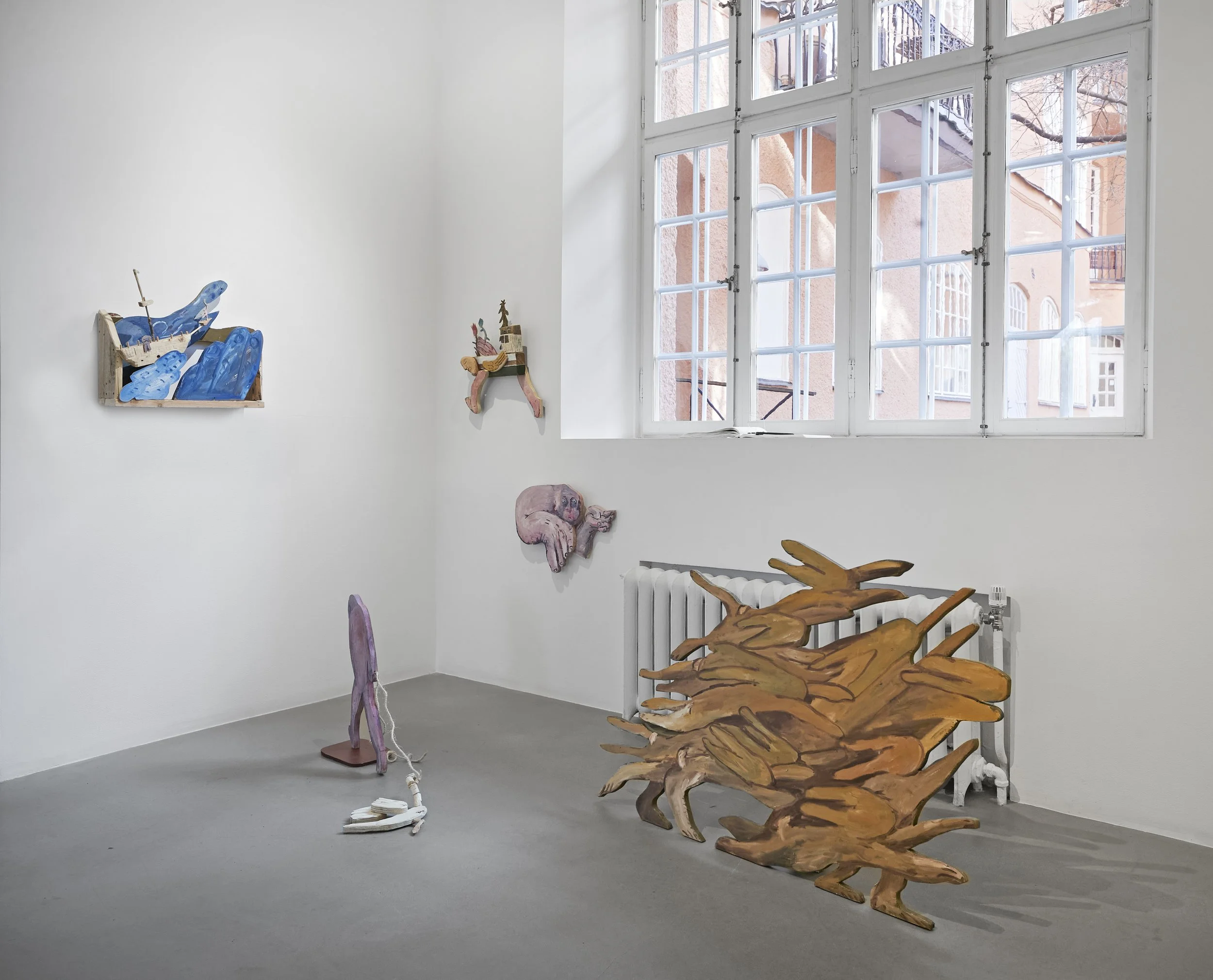
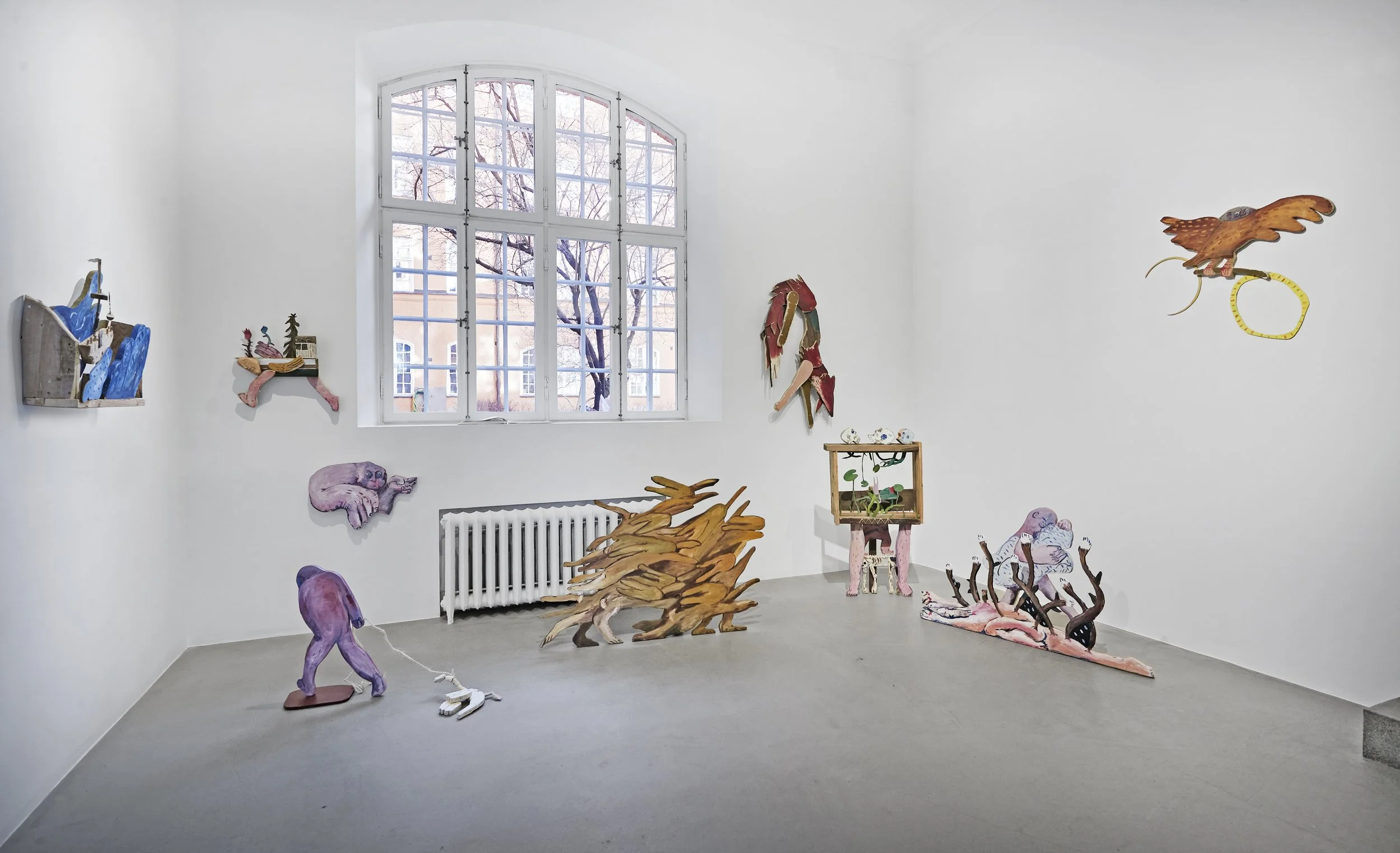
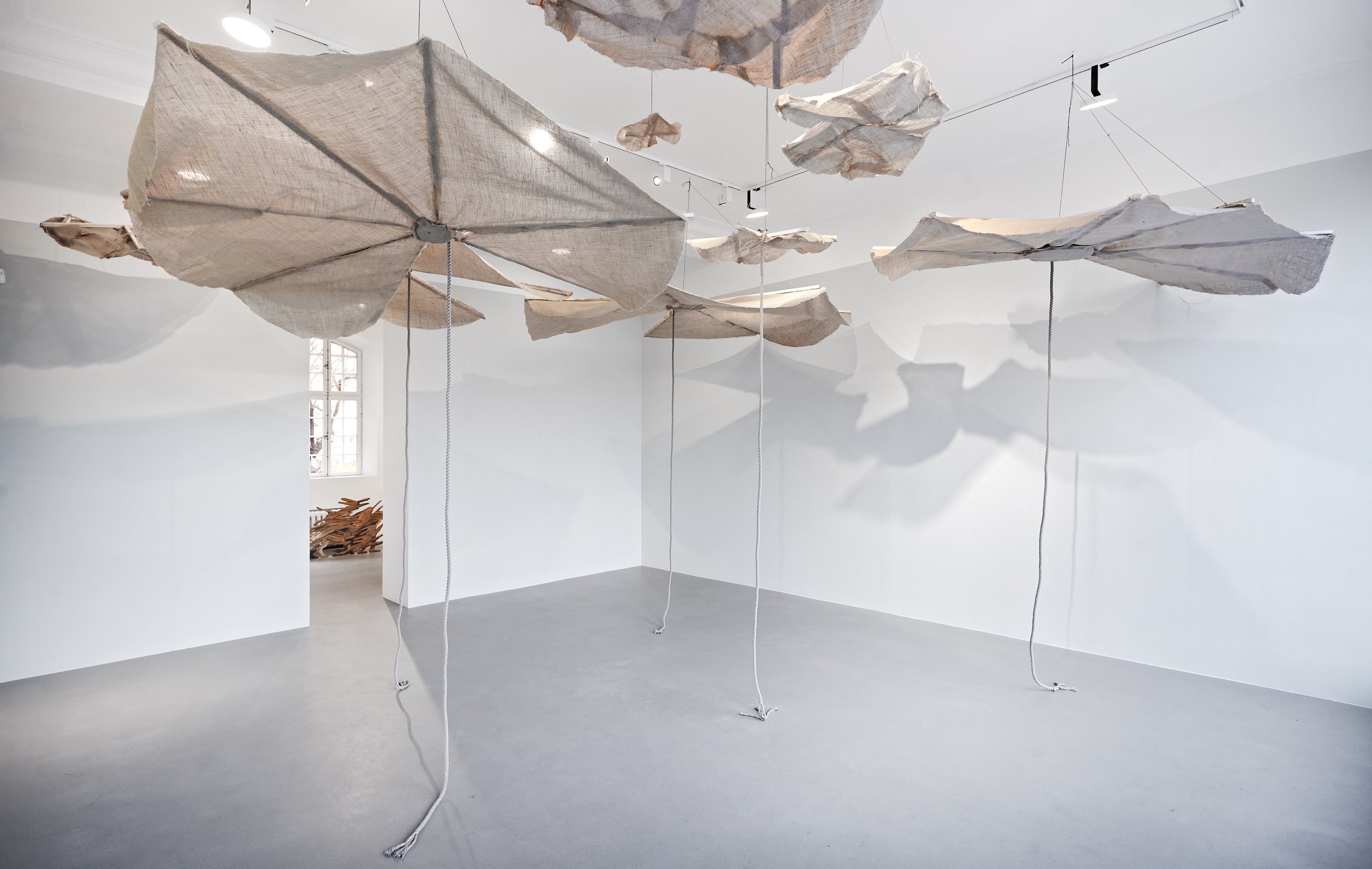
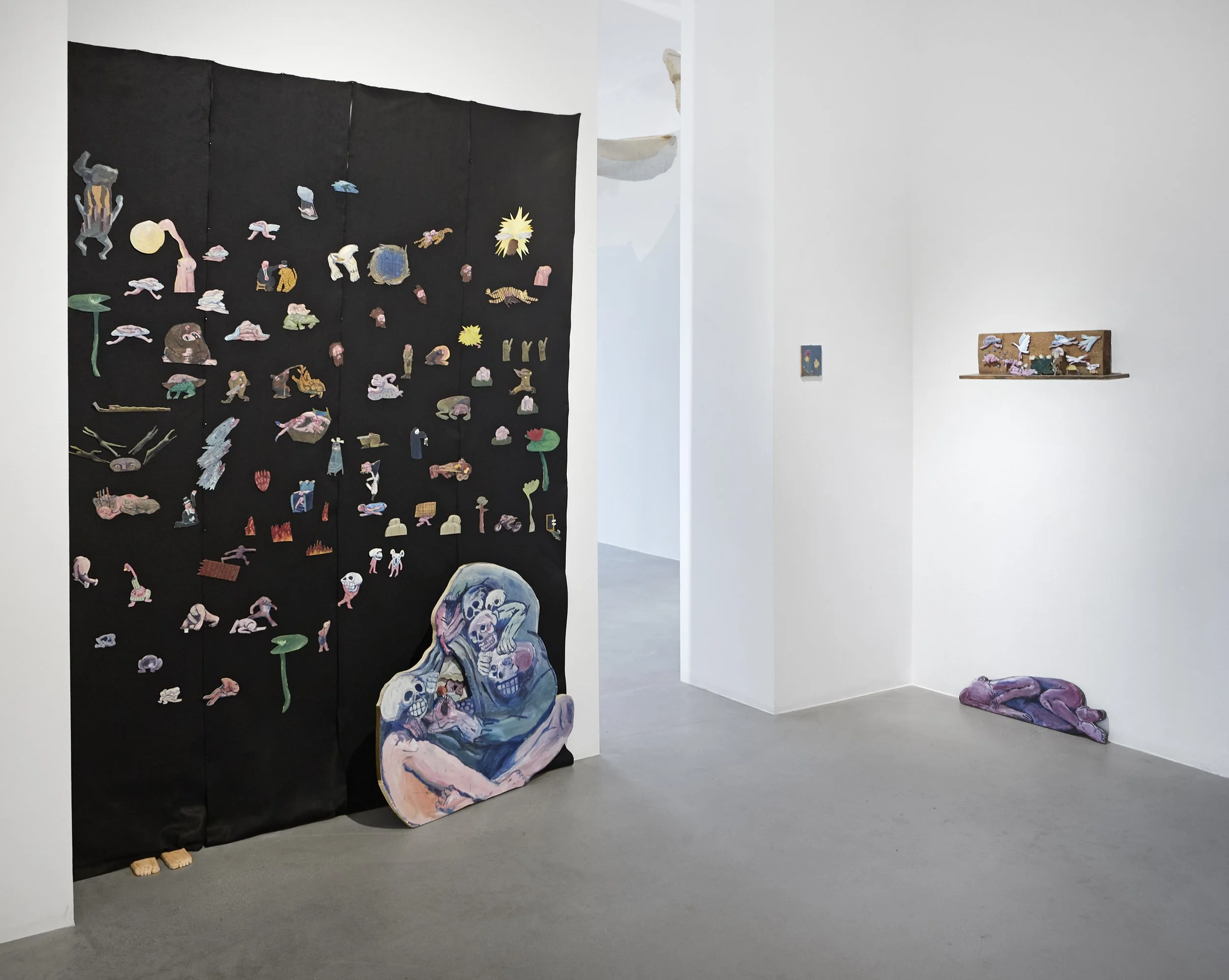
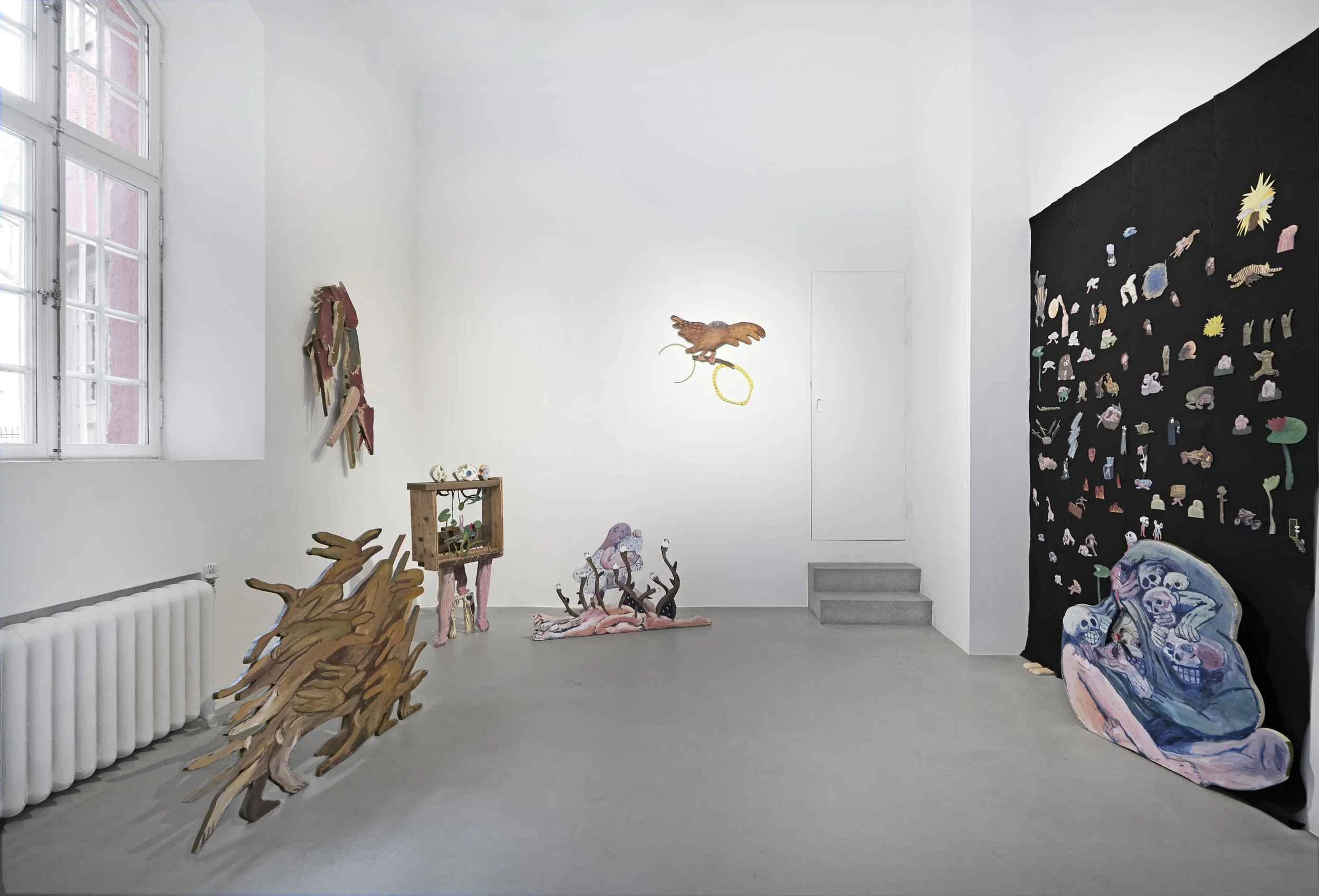
Thour constructs situations: self-contained worlds inhabited by tigers, boys with matches, hunters, and encroaching vegetation. There is a lightness in the materials, in the use of MDF and the visual language of children’s book illustration, yet a darker undercurrent persists, a quiet sense of threat. As we move through these environments, we begin to wonder what calls us forward. Is it something benevolent, or are we being drawn, like by a Bäckahästen figure from folklore, toward an uncertain end? Are we free to move, or is our freedom like a dog’s in a dog run — unleashed, yet still inside a fence?
Thour’s world's touch something fundamental and human — our persistent need for something to lean on; a story, religion, plan, structure, something to believe in and blame. The exhibitions do not instruct or resolve, they unfold as constellations in which we may catch sight of ourselves.
“If a tree falls in a forest and no one hears it, does it make a sound?”
This philosophical thought experiment centers human perception and reflects our tendency to stand apart from what we are already part of. The forest holds a central place in Thour’s practice both as a character and as a physical presence. Raised in theforests of Småland and currently living in the Northern town Jäckvik, the woods are immediate and lived for the artist.
Today, the forest is often approached with a distant reverence, almost as if entering a church. Respect is necessary, yet this sacred hush signals distance as though we have
forgotten our shared origins in the wild. It raises the question: what have we allowed to fall asleep — in ourselves and in our surroundings? What parts have we pushed away to adapt? Thour’s work asks what might happen if those dormant elements were allowed to wake and how their awakening might alter the world we think we know.
“The earliest experience of art must have been that it was incantatory, magical; art was an instrument of ritual.”
— Susan Sontag, Against Interpretation
As a child, Thour imagined living in the Stone Age, and that longing threads through his practice. The Stone Age spans the vast majority of human history, a time before writing, when meaning was carried through marks, symbols, images, and objects. Recent archaeological discoveries, including a set of stone figurines depicting a wild boar, a vulture, and a fox — believed to form one of the earliest three-dimensional narrative scenes (Karahan Tepe, c. 9,000 BCE) — remind us that symbolic thought and emotional expression were already highly developed in prehistoric societies. These works were not mere illustrations; they were charged objects, instruments of ritual and imagination. Thour’s own sculptural scenes echo this impulse. In them, we recognize something ancient and continuous, the human need to shape stories in space, and to see ourselves reflected within them.
“The desire to play returns to destroy the hierarchical society which banished it.
It becomes the motor of a new type of society based on real participation.”
— Raoul Vaneigem, The Revolution of Everyday Life
For Vaneigem, play is not diversion but revolt. Hierarchical systems such as religion, politics or economics, suppress spontaneity and lived intensity. They replace participation with obedience. Against this, he proposes play as reclaiming experience: a way of acting from desire rather than duty.
Thour’s process and practice resonate with this charge. He lets play lead both inside and outside the studio, in nature, through walking and exploring, trusting that what unfolds beyond the studio will find its way back into the work. Play arrives lightly andleaves just as easily. It cannot be forced and moves to its own rhythm. When it collapses into obligation or expectation, it ends.
Through paintings and installations, Thour constructs situations that resemble games or rituals caught mid-gesture, as if something has just happened or is about to unfold. The figures seem bound by rules we cannot fully see, yet no clear outcome is determined. This uncertainty draws us in. We begin to sense the dynamics at play: who leads, who submits, who hesitates, and where we ourselves might stand. Play is also personal for Thour. It is a return to moments that shaped him, to situations he needs to re-enter. In play, danger is simulated but not fatal; emotions can be stretched, distorted, confronted without final consequence. There are false games, too. Systems that promise freedom but reinstate control. Vaneigem warns of this: ideologies masquerading as vitality while draining it. Thour’s work hovers precisely at that edge — between real play and imposed role, between participation and conformity. If fixed hierarchy banishes play, as Vaneigem argues, then reclaiming play becomes an act of resistance. Not grand revolution, but lived intensity. Not spectacle, but presence.
– Lauren Johnson, Stockholm, Winter 2026